My Two
Cents on Colony Collapse Disorder
K.Ruby Blume
updated 9/11/12
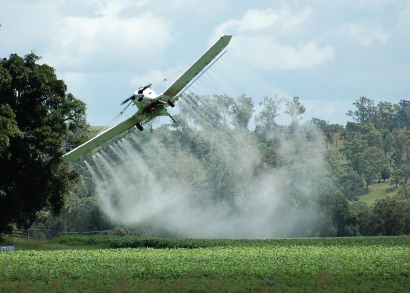
Since I first started thinking about CCD close to 10 years ago, it has been definitively proven that it is not a pathogen or cell phone towers. Instead, it is caused by clothianidin, a neonicotinad pesticide produced and sold by the Bayer Corporation. Clothianidin is used primarily to coat corn seed before planting and stays with the plant through its growth cycle--all the way to pollen production. It impacts the bees both through the dust that is kicked up by automated sowers as well as being present in the pollen. Since corn is wind polinated and does not reply on bees, it appears that neither Bayer, nor the corn industry has much incentive to ban the chemical in spite of its impact on bees. And though corn doesnt rely on bees for pollination, bees do collect corn pollen, which is abundant in late Summer and Autumn, when other pollen sources have diminished. The bees bring this poisn-laced pollen back to the hive where they use it to feed the young bees through winter and early spring. The pesticide works upon the bees nervous system and specifically their navigational system. The new spring bees have been dosed ith this stuff and so when they go out to forage in Spring, they can no longer find their way home. Thus we see the typical signs of CCD: a hive that has a queen, brood and food stores but no population.
To learn more about Clothianidin, watch this half hour documentary.
Of course Clothianidin is still only part of the problem. While most people know the abuses of feed lots and non-organic agricultural practices, they remain unaware of the many unhealthy conventional methods that are practiced upon our bees. Bees, are treated less as living creatures and more as commodities in the way they are husbanded commercially.
A group of Northern California dowsers focused their efforts on honey bees one day and posted the following statement:"There are some honeybee colonies that are dying off faster than they can reproduce and others that are doing fine. We found that, in general, the enslavement of bees by humans and the consequent disruption of the honeybees’ natural state of being for the sake of human profit has caused practices by humans that have taken away the joy of life for the honeybees."
In the following paragagraphs, the bulk of my orginal article, I outline some of these practices and what we can do as beekeepers and citizens to reduce the stresses and increase the joy in the lives of our friends, the honeybees.
*************************************
It doesn’t take
a million dollars and a pack of scientists to identify some of what
is going on in the commercial beekeeping industry. You have two clues
right there: commerical and industry. This speaks
to both volume and focus. Volume creates standardized procedures and
monoculture; the focus is on profit and productivity at the cost of
long term health of the bees (or anything else).
Here are a few things to consider:
1. Genetics - Beekeepers have been selectively breeding
honey bees for characteristics such as gentleness and productivity for
over a hundred years. In-breeding of this sort erodes genetic diversity
and can lead to genetic deficiencies. Bee breeders and purists decry
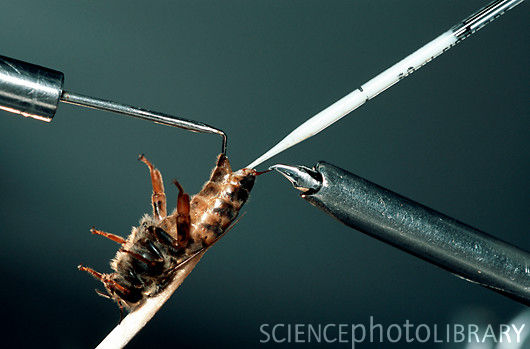
feral genetics as contaminants. and practice artificial insemination (see picture below).
2. Antibiotics - Conventional commercial beekeepers regularly
administer antibiotics whether thier bees are sick or not. Trying to prevent disease in this way is like preventing wild-fires: it is possible in the short term, but then,when it does burn it burns hot and fast. The use of antibiotics has been proven to contribute to immune system
deficiencies and promote the
development of antibiotic resistant super-pests and diseases. Bees must be allowed to build resistance through natural cycles of die-offs.
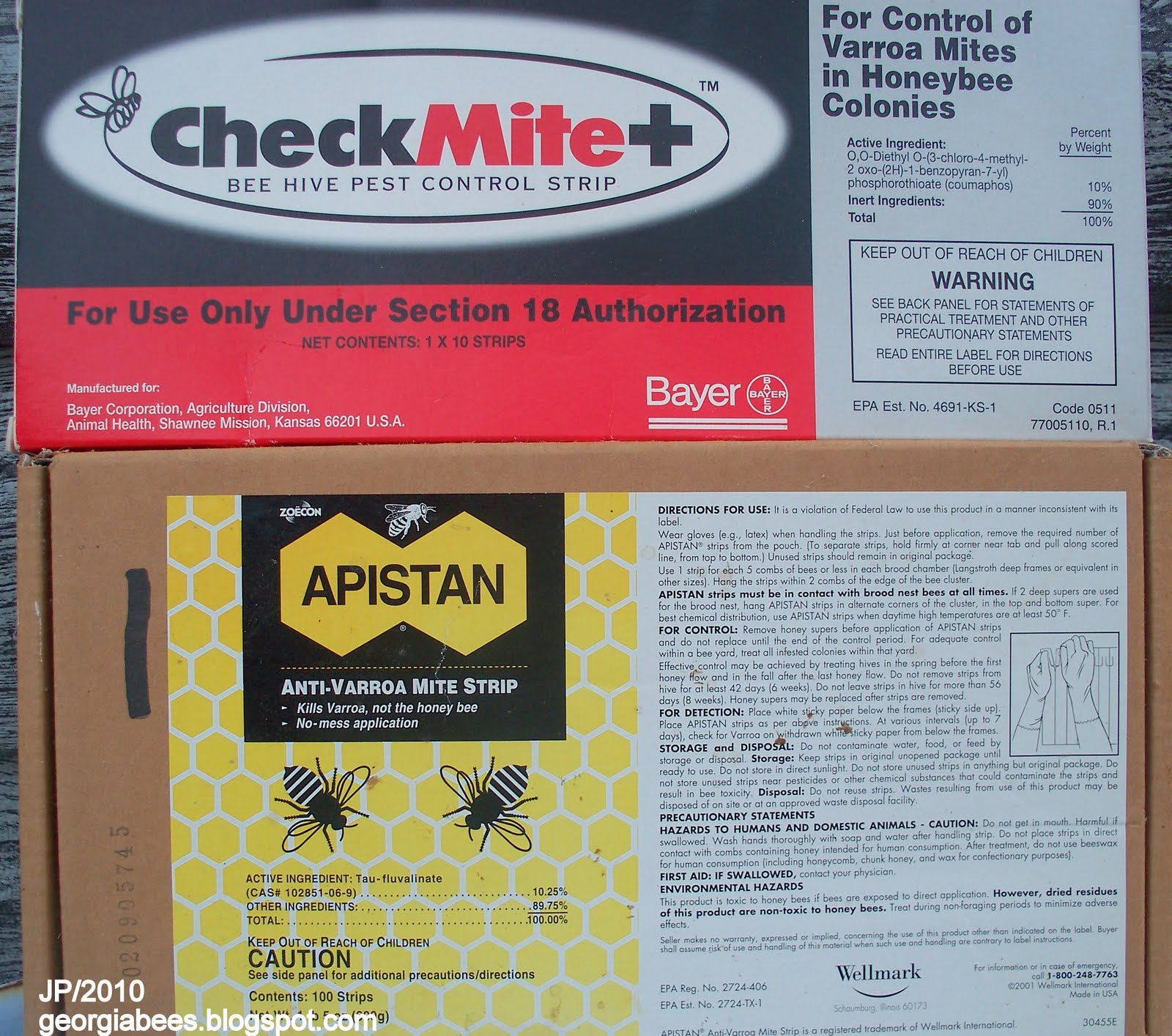
3. Chemicals – Large scale beekeepers use a host
of other chemicals including fumigants, drugs and pesticides. Just as
many drugs made for human consumption can have negative side effects
this is true as well for bee drugs. Many of these treatments are toxic
and carry label warnings that they should be handled only wearing gloves
and must be kept out of eyes nose and mouth. They are often treated in the winter, when they are already stressed in order to keep these toxins out of the honey. However wax comb that has been tested carries traces of thezse noxious chemicals.
4. Sugar Water- It is the industry standard to feed
bees high fructose corn syrup during dearth periods (winter or storage
of colonies in mass apiaries where there is limited access to floral
resources). Some beekeepers even maintain sugar water is healthier for
the bees than honey—that honey may contain pathogens. In fact, honey is the perfect food for bees. The pH of sugar is far lower than honey and can drastically upset the delicate balance of fauna and flora inside the hive. The pH of sugar favors many bee diseases. The best practices inclde leaving the bees enough of their own honey to survive in times of dearth and/or keeping stores of known honey on hand for these situations.
5. Cell Size – Over a hundred years ago beekeepers
got the idea of increasing the cell size of the bee comb by nearly a
half a millimeter. They did this by increasing the cell size of the
wax foundation installed in the beehives. The increase was from the
natural brood cell size (of the European honey bee) of 4.9mm to the
manipulated cell size of 5.4mm. Their reasoning was that bigger cell
size would produce bigger bees and therefore more honey. However the
life cycle of the varroa mite, one of the bees biggest enemies, takes
place inside the brood chamber where the developing mites suck on the
bee larvae. More room in the brood chamber means more room for mites.
Further the larger cell size increases time untilhatching by 12-24 hours, which also increases the reproduction of the mites. Mite populations and the resultant stress they cause have sky-rocketed
in the last 10 years contributing greatly to colony die-off.
In the
top bar system the bees are free to build as they wish. Left to their
own, they tend to build the brood cells smaller and the honey storage
cells larger. In my 16 years as a beekeeper I have never had
much problem with mites--except for the year I worked with the Langstroth
system and used pre-formed foundation. Fortunately things are shifting
as this knowledge becomes more common and bee equipment suppliers are
now offering "small cell foundation" which is closer to the
size the bees would naturally build their brood comb. In any hive system, you can also always simoly leave the foundation off and let the bees build what they need.
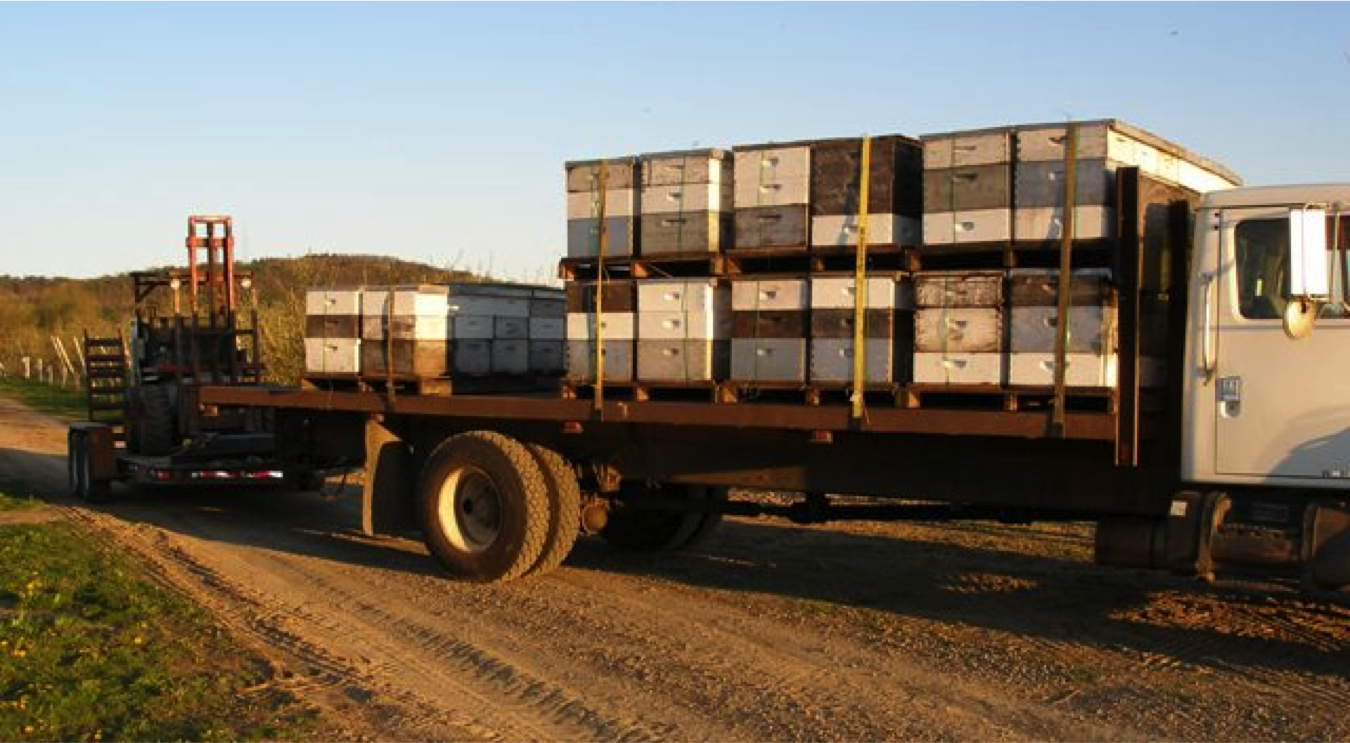
6. Forced Labor There are about 2.5 million colonies of honeybees keptcommercially in the U.S. In the middle of winter, close to 1.5 million of those bees are shipped to California for the almond pollination. In order to bulk bees up and prepare them to work before they are seasonally ready, they are fed sugar water and pollen substitute made primarily from GMO soy. Then they are loaded onto with giant forklifts and shipped across the country. It is one thing as humans, to forgo any downtime, but to force this upon another creature is enslavement.
What Can We Do to Help the Bees?
!. Manage bees without chemicals including antibiotics and miticides Allowing natural die-offs builds resistance of the bees, rather than creating super pests
2.Capture feral bees and promote feral genetics. Feral swarms are doing well naturally in our bio-region
3.
Allow bees to mate naturally. Natural mating promotes bio-diversity, stronger genetics and more joy!
4.
Allow bees to build natural comb Natural comb inhibits mite populations. The bees build what they need for brood and honey production
5.
Feed Honey not Sugar. Honey is the perfect food for bees. The pH of sugar upsets the natural flora of the hive Always leaves the bees enough of their own honey to survive. Use sugar only in emergency (life or death) situations
6.
Grow Organic. Pesticides upset natures balance and kill beneficials as well as pests. Using bio-diversity and natural controls in the garden puts the system in balance
7.
Learn About Bees. Teach about Bees
The Bottom Line
Honey bees are a highly evolved, successful and resilient species. They have an elegant self-sustaining life cycle and millions of years
of evolution behind them.There are many hundreds of thousands of feral colonies thriving throughout the world. It is doubtful they are going extinct any time soon. However the commercial
bee industry and big agriculture which rely upon it are in big trouble. Continuing down this path of short-sightedness and greed which includes allowing the sale of dangerous toxic pesticides, stuffing bees full of anti-biotics and sugar water
is a folly which can and will lead to the collapse of our food systems if left unchecked. It iis time to tune-in to the bees,
to learn from them how to live so abundantly in harmony with each other and the environment around them.
artificial insemination
trucking bees
miticides
pesticides